
About EssayMaster
Research & Thesis Support
About EssayMaster
Research is a journey, and EssayMaster supports students along it, from the first research question to the last line of the discussion.
Thoughtful Research.
Meaningful Results.
01Our approach
Careful work, explained clearly.
Research projects tend to become difficult in the same places, such as a question that is too broad, a method that does not quite fit, a table of output that nobody has explained, or a discussion chapter that repeats the results instead of interpreting them, and EssayMaster exists to help students through those places.
We start from the research question, because every later decision depends on it. From there, support follows the shape of the project, whether that means talking through a methodology, working through statistical output, or reviewing how themes have been built from interview data.
The test we apply to our own support is whether you could explain the study without us, including the reason a method was chosen, the meaning of each number you report and the limits of what you found. The research and the decisions in it remain yours, and our role is to make them clearer.
The owl in our mark is an old symbol of learning and of patient attention, and both qualities matter in research, where small details such as a mislabelled variable, an unreported assumption or a missing reference can change how a whole chapter is read.
02Three principles
How we work
- I.
Question first
When the question is clear, the choice of design, data and analysis becomes much easier to explain and to defend, so we return to it at every stage of a project.
- II.
Explained in plain language
An explanation that you could not repeat on your own in a supervision meeting is one we treat as unfinished, whether it concerns a method, a table of output or a piece of terminology.
- III.
Every detail matters
A reader’s trust in a study is built from small things done properly, which is why variable coding, table formats and reference consistency are checked as carefully as the main argument.
03Picture credits
Pictures on this site
Archival and library images from Wikimedia Commons, used under the licences shown. Images have been resized and cropped for layout.
- Card catalogue cabinet at the Indiana State Library, with a pull-out shelf for card drawers. Photo: TBurmeister (WMF), CC BY-SA 4.0, via Wikimedia Commons. Shown on Home.
- Detail from a chart of the average monthly wholesale of poultry and game at Les Halles, Paris, 1885 to 1888 compared with 1889. Jacques Bertillon, Album de statistique graphique, Bibliothèque nationale de France, public domain, via Wikimedia Commons. Shown on Home and Research Notes 001.
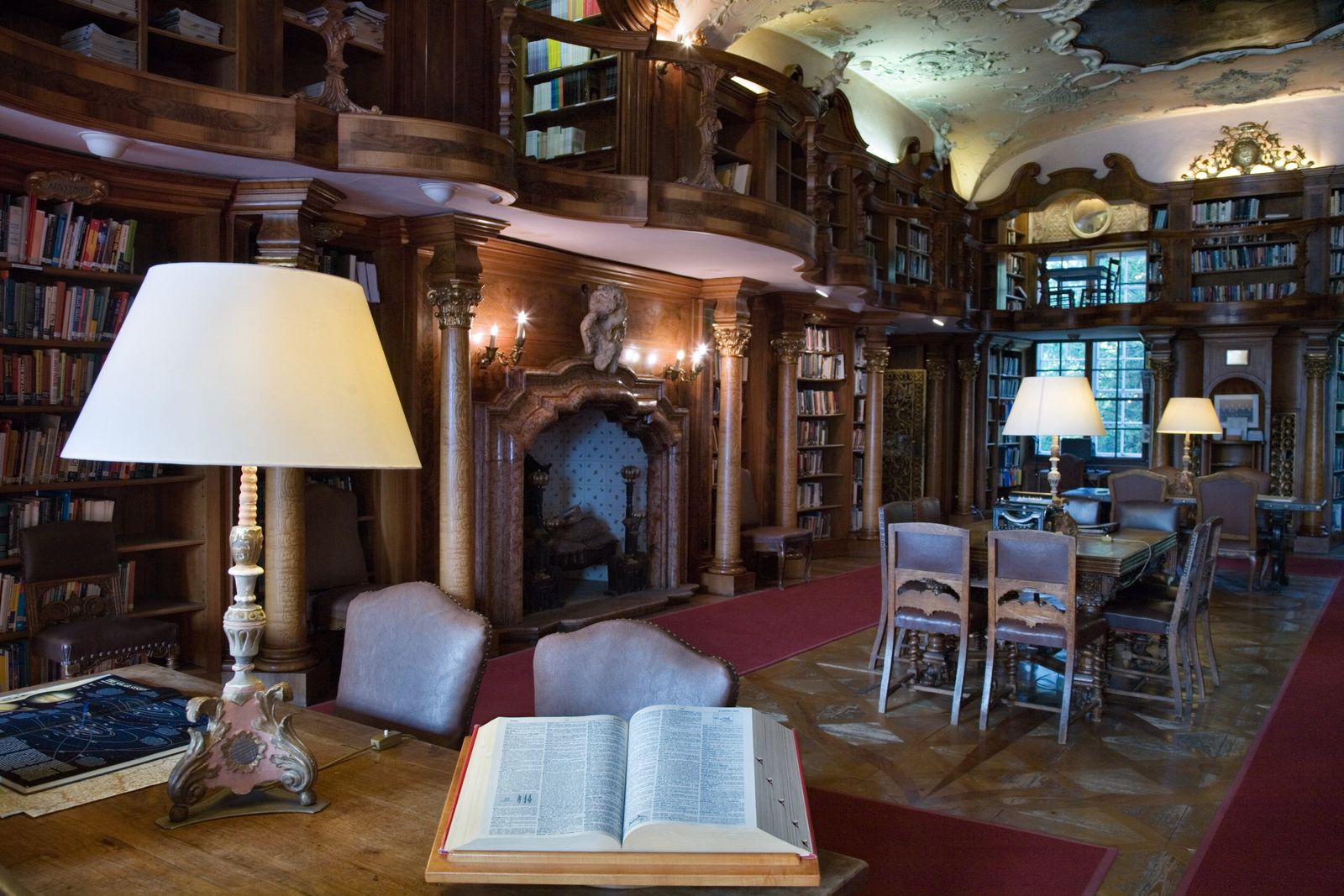
- The Max Reinhardt Library, Schloss Leopoldskron, Salzburg. Photo: Jorge Royan, CC BY-SA 3.0, via Wikimedia Commons. Shown on Home and About.
- Rare books collection, Rammohun Library and Free Reading Room, Kolkata. Photo: Sumitsurai, CC BY-SA 4.0, via Wikimedia Commons. Shown on Research Support.
- Detail from a statistical map of Paris, 1889, showing the operations of the Mont-de-Piété at its head office, branches and auxiliary offices. Jacques Bertillon, Album de statistique graphique, Bibliothèque nationale de France, public domain, via Wikimedia Commons. Shown on Data Analysis.
- Emerson’s study, showing shelves of books, fireplace and desk. Photographic print, 1888. Library of Congress, Prints and Photographs Division, public domain, via Wikimedia Commons. Shown on Thesis Support.
- Old books on open-access library shelves. Photo: Frederick Noronha, CC BY-SA 4.0, via Wikimedia Commons. Shown on Resources.
- Wooden card catalogue at a public library in Nashua, New Hampshire. Photo: MarkBuckawicki, CC0, via Wikimedia Commons. Shown on Research Notes 002.
- A drawer of 3 × 5 inch index cards from the copyright card catalogue, Library of Congress. Photo: Michael Holley (Swtpc6800), public domain, via Wikimedia Commons. Shown on Research Notes 003.
- Study area and stacks, Thompson Memorial Library, Vassar College. Photo: Sabatheus (Jim Mills), CC BY-SA 4.0, via Wikimedia Commons. Shown on Research Notes 004.
- Florence Nightingale’s “Diagram of the causes of mortality in the army in the East”, 1858. Florence Nightingale, public domain, via Wikimedia Commons. Shown on Research Notes 005.

EssayMaster.
Thoughtful Research.Meaningful Results.
Research & Thesis Support